
4 Ways I’m Rethinking Love
4 ways I got it wrong (so you can get it right)
In Dr. Anna Machin’s book (and EQ of Wealth reading list suggestion), “Why We Love,” she speaks about the absurdity that in English, there’s only one word for love.
Whereas in other languages, such as Greek, there are seven to describe such an essential human experience and emotion.
The 7 Words for Love in Greek
Eros (ἔρως) - Passionate, romantic love; desire and attraction
Philia (φιλία) - Deep friendship; affectionate, loyal love between friends
Storge (στοργή) - Familial love; natural affection between family members, especially parents and children
Agape (ἀγάπη) - Unconditional, selfless love; often used for divine or spiritual love
Ludus (this one is actually Latin) - Playful, flirtatious love; the early stages of romance
Pragma (πράγμα) - Enduring love; mature, practical love built over time
Philautia (φιλαυτία) - Self-love; can be healthy self-care or unhealthy narcissism
Who we decide to marry is the single most important decision of our lives, for our physical, emotional, and financial well-being.
It can extend our lives or sometimes cut them short.
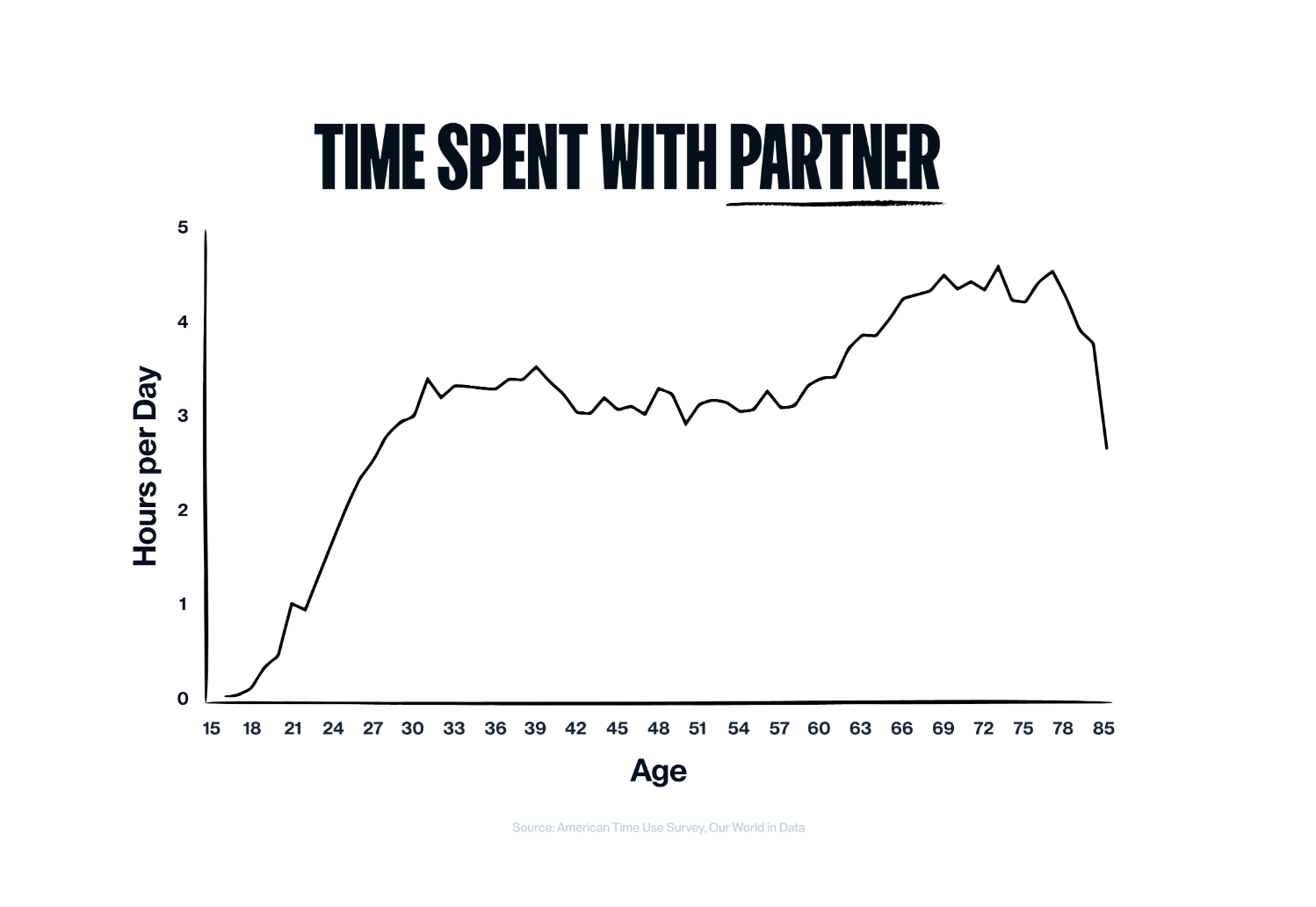
Here is a chart from EQ of Wealth's Reading List, recommended read, “The 5 Types of Wealth” by Sahil Bloom. The only person we spend more time with in our lives, besides ourselves, is our partner.
Love is the foundational value of my life and work. It’s also something I’ve been blessed to have in abundance throughout my life.
That means I have plenty of experience to share — wrong and right — and just about a decade of study into relationships, love and partnership to inform some new perspectives on what may be the oldest subject — LOVE.
Here are the 4 Main Things I Personally Got Wrong About Romantic (or really all) Love.
Plus Some Hard-Earned Wisdom, so You Can Get It Right!
1) In love, choose for the lows — not the highs.
What I got wrong: I chose men who were fun to be around, went on adventures, were attractive, and sometimes looked good in pictures or were entertaining to share with my friends and colleagues. Partners who were great in the high, happy moments. This isn’t wise. It’s choosing a partner for the romantic honeymoon or when times are good (the “highs”), rather than for real life (the “lows”)..
What I learned: Choose a partner for the lows. Moving forward, my top priority will be: Can I be really messy, sick, or feel hopeless around this person? Will they get up for the 7:00 a.m. doctor’s appointment with me? Will they sit with me in deep compassion when I’m experiencing moments of deep sadness?
2) Independence is limited. Have dependents.
What I got wrong: As a super-blessed and lucky woman raised by two working and loving parents and a feminist, wealth-creating grandfather, I believed that true freedom, especially as a woman, meant being entirely self-reliant. I can earn my way and not need anything from anyone. This is important up until a point, but when life knocks you down —and it will by the time you’re in your 30s — no matter how blessed your life is, getting up will take a village.
What I learned: If I have people who I depend on and depend on me (family, friends, teachers, and loving partners), I have a built-in safety net. This means that my ability to be resilient and my willingness to take risks are directly correlated to how many dependents I have. We need people to get through life. And if I know I have people around where there’s a real give and take, I know I will always have a softer landing when I fall, and therefore, I will be more willing to venture out.
3) Companionate love is the real winner — not romantic love.
What I got wrong: I lived for romance. I wanted to live in a movie. So that was the love I chose. The number of men who have said they love me or want to marry me or say, “I love you” or “I think I love you,” on a first date is probably way above average. (We could also attribute this to the fact that one-third of the men I’ve dated in my life are French.) I learned the hard way — this cinematic love is not a sign of the right thing. It isn’t love. It is passion. Fiery and burns quickly. It’s not sustainable.
What I learned: Friendship is the single most important characteristic of a thriving and long-lasting relationship — and sex life. It’s called companionate love. This is why, instead of romantic rendezvous, I’m focused on friendship. That’s the sign of the right thing that lasts.
Happiness Expert and EQ of Wealth recommended author Arthur C. Brooks discusses the importance of companionate love at about 1 hour and 6 minutes into the above podcast interview with Mark Manson.
4) There’s no excuse for bad behavior. There’s only acceptable and unacceptable.
What I got wrong: Because I focused on passion in lieu of friendship, I had the pattern of sometimes dating men who were exciting, but didn’t show up when it mattered. I made excuses for them. This is wrong. There’s acceptable and unacceptable behavior. One route is about excuses, and the other is about accountability.
What I learned: “I’m sorry” (and truly meaning it) followed by actions that match that intention is one of the most romantic things we can do for someone else.
We all mess up, and therefore, repair is one of the most important aspects of maintaining long-term relationships. It’s essential.
I can tell you — just in starting to apply some of these insights — I’m noticing so much more goodness.
To my favorite value and emotion of all — love!
