Accelerator
A 6-month framework to bring your idea to life
How do you build the roots of a strong business in six months?
That's the question at the heart of the first six months of the EQ of Wealth® accelerator.
The goal: develop everything you need to launch — a business-in-a-box — and then execute within a year.
This process comes from bootstrapping my own business, years of building purpose-driven startups, and partnering with wealth owners to successfully launch theirs. Whether you're building for a niche audience or a broad one, these six foundations apply.

Month 1: Messaging
Everything begins with messaging — not a logo.
Why?
Because when a message is simple, it’s shareable.
If you can't describe your idea simply and clearly, you can't share it, test it, or improve it. The entire first month is dedicated to uncovering the founder's story and turning it into language that resonates.
The accelerator process is tailored to each business and founder, but the following four questions are important for all founders and anyone considering starting their own business.
Some reflections questions
What were the things in your life that came easily to you as a child?
What is something you’re always deeply curious about?
Have you experienced flow professionally? If so, when is that?
Describe your career dreams and/or your ideal work day. How does the day unfold?
Month 2: Market Research
Now we pressure-test the idea against reality.
This means competitive analysis, understanding market size, and — most importantly — talking directly to potential clients and referral partners. The research process can take up to six weeks depending on availability, but it's non-negotiable.
A few principles:
Compare apples to apples — Keep interview questions and data points consistent across every conversation.
Track both hard and soft data — Qualitative interviews with your ideal clients/partners and quantitative facts about your market are both needed to reveal the full picture of your unique business opportunity.
Note the trends and outliers — Within the trends lies the truth, and if there are major exceptions, ask more questions.
There's also an unexpected upside: if you're solving a real problem for real people, the research process itself can generate your first clients. That's exactly what happened with Legacy Forward, a bespoke family archiving business that came out of our accelerator — Sarah Johnson got her first client during this stage.
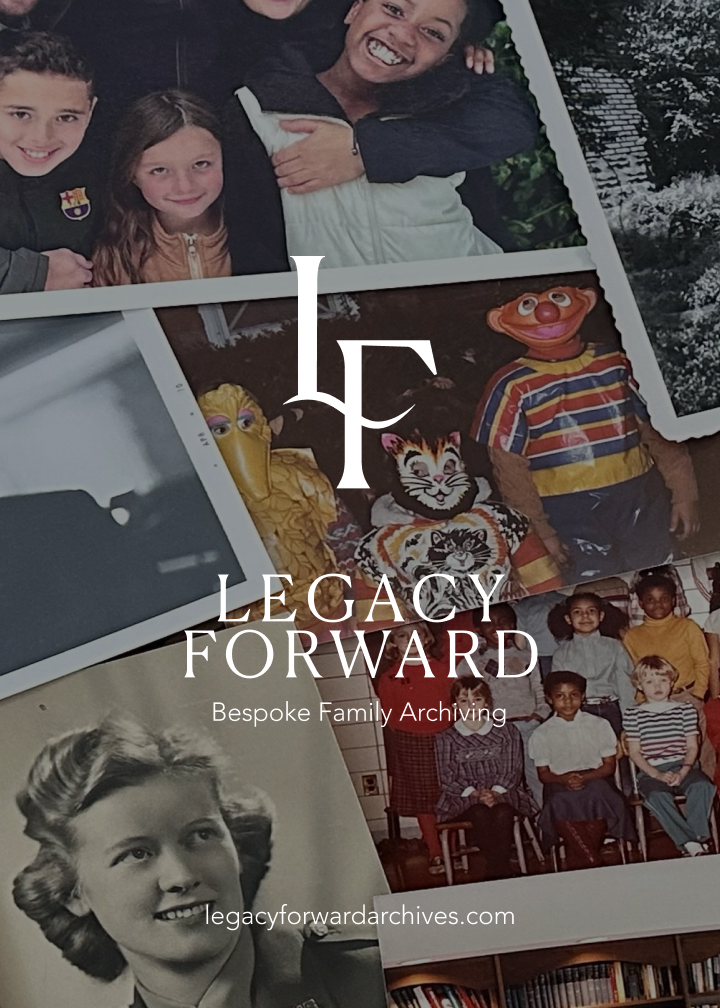
Legacy Forward caught on super quickly! Founder Sarah Johnson got her first client during the market research interviews!
Month 3: Service Offering & Content Development
This is where you develop your core services — pricing, deliverables, and desired outcomes.
I recommend three offerings: enough variety to meet people where they are, few enough to avoid choice paralysis.
Entry Point — The easiest way for someone to experience your work.
Middle Offering — A larger scope or a different angle of comparison.
Signature Offering — Your deepest, broadest engagement. For my business, this is the accelerator itself!
Then comes content development: finding the right platforms to reach your audience and the topics that build trust over time.
The question isn't "where should I post?" — it's "where does my specific audience already pay attention, and what can I share that genuinely helps them?"
For my business, this means long-form posts, a monthly newsletter, and LinkedIn. EQ of Wealth® isn’t a mainstream offering, so mainstream distribution channels, such as TikTok, Instagram, or Facebook aren’t needed. In fact, they’re distractions.
Month 4: Client Experience
The goal is to create all the touchpoints in your customer experience journey.
How to start a relationship and how to end a working relationship are the most crucial aspects, and the importance of surprise and delight cannot be overstated.
The main stages of Partner/Client experience are:
Enrollment or Discovery: How you bring in new business and share your work
Onboarding: Legal, payment, and housekeeping
Welcome Experience: A warm entry into your business relationship with thoughtful touches, and a Clarity Kick-off, which is proactively setting expectations (or making all the subtext, text) so your business partnership is set-up for mutual understanding and success.
Project Completion and Graduation: How you wrap up and reflect on your partnership that leaves a very positive impression, alongside potential referrals and testimonials. How we end really matters, thanks to the peak-end rule.
Success Story in Client Experience: AtlasDaughters, a transformative travel company for mothers and their children and a graduate of the EQ of Wealth® accelerator, demonstrates the huge return on impact when you get client experience right. Founder Amy Dornbusch designed every touchpoint for her travelers on her company’s first trip with deep thoughtfulness and intentionality — from the welcome experience to the final moment of the trip.
Results: This AtlasDaughters' raised $1.5M for the world's first fully compostable diaper.

Above is AtlasDaughters founder Amy Dornbusch and her eldest daughter (and inspiration!), Ruby.
Month 5: Storytelling & Strategic Partnerships
By now, you know which parts of your business resonate most. Month 5 is about sharpening that story — for public speaking, elevator pitches, and the everyday moments when someone says, "Tell me about your business."
Storytelling is also the fasttrack to building trust and bringing new potential customers, clients, or partners into your orbit, because we remember stories 22 times more than facts alone.
Then we turn to strategic partnerships — the right relationships that accelerate growth. Referral partners, cross-promotional allies, sponsors, and strategic collaborators are all effective ways to grow your business faster and with the right people alongside it.
Month 6: Operations & Launch Planning
Now we build the machine.
This is the operational backbone — management software, pipeline processes, potential hires. I believe the only job of a founder is to listen and add value.
If your skillset isn’t the best way to add value, then focus on where you’re great and irreplaceable (eg. storytelling and brand awareness) and bring on the smartest people to handle the rest.
When there's room, I also like to establish what I call a "founder as a machine" routine — the habits that keep your resilience and creativity intact when the work gets hard.
Then comes the launch plan. The business may not go live until months 9–12, but month 6 is where we answer the essential questions:
Where and how is the announcement made?
What's the right timing?
Is there a press story, an event, a strategic reveal?
P.S. And if you're wondering — what about the logo? The brand? That comes in month seven, intentionally. Only after understanding the inner workings of your business can you create an outer image that truly reflects your unique vision.